
Fact-Based Digital Marketing Strategies for Corporate Growth
Every year, there are weeks when search behavior shifts dramatically. A major international sporting event, a fiscal year-end season, a massive event that captures the attention of millions for several consecutive weeks. Digital traffic moves differently, audience priorities shift, and every B2B company should be asking the same question: is my digital strategy built to capture those spikes, or only to watch them go by?
This summer, as millions of people across North America and the world closely follow the major international football tournament bringing together national teams from five continents, search patterns, content consumption, and digital behavior shift temporarily. And even if your company has nothing to do with sports, that behavioral shift is valuable information for any well-designed growth marketing strategy.
This isn't about trying to sell something football-related. It's about understanding a deeper principle: attention spikes are moments when latent demand becomes more visible, and companies with the right structure are the ones that capitalize on them.
Executive summary:
|
What Happens to Digital Behavior During a Large-Scale Event
When a sporting, cultural, or economic event captures global attention for several weeks, at least three measurable phenomena occur in digital behavior:
• Total digital content consumption time increases — people check more news, more social platforms, and more searches related and unrelated to the event.
• Browsing time patterns shift — traffic peaks move to different hours than usual (midday, afternoons, extended weekends).
• Windows of high advertising and editorial receptivity open — audiences are more active and willing to consume new content, as long as it's relevant and timely.
These phenomena aren't exclusive to brands related to the event. They're broad shifts in the digital ecosystem that affect the digital positioning of any company publishing or promoting content during that period.
Why Most B2B Companies Waste These Spikes
The most common mistake isn't ignoring the high season. It's reacting too late. When a company decides to capitalize on an attention spike without having the foundation ready — optimized content, fast-loading pages, a clear keyword strategy — the result is noise, not results.
|
What Reactive Companies Do |
What Structured Companies Do |
|
Publish last-minute content with no keyword strategy |
Publish planned content weeks in advance, aligned to their SEO pillar |
|
Expect immediate results without measuring anything |
Measure traffic, conversion, and visitor source from day one |
|
Treat the season as an isolated event |
Integrate the season into their annual editorial calendar |
|
Don't connect seasonal content to their real offer |
Use seasonal content as a bridge to their pillar pages |
The Principle Behind Well-Executed Growth Marketing in High Season
Sustained growth doesn't depend on capitalizing on a single season. It depends on having a digital marketing strategy infrastructure that can activate quickly when market behavior changes. That, in essence, is the difference between a company that reacts and one that's prepared.
Three elements make that response capability possible:
Modular, Reusable Content
Having content pieces that can quickly adapt to a seasonal context without losing coherence with the overall strategy. This requires a content architecture designed from the start, not isolated content created on the fly.
Technical Visibility Already Resolved
If your site has speed, indexing, or structural issues, no traffic spike will convert into results. Before thinking about capitalizing on the season, it's worth reviewing whether there are gaps in your web positioning analysis limiting your ability to respond.
Active Measurement From Day One
There's no point publishing seasonal content without measuring its real impact: traffic, time on page, lead conversion. Without that data, there's no way to learn what worked for the next seasonal opportunity.
How to Turn an Attention Spike Into a Real Business Opportunity
Capitalizing on a period of high digital attention doesn't mean trying to go viral with the topic of the moment. It means using that context as an entry point toward something that's actually relevant to your business.
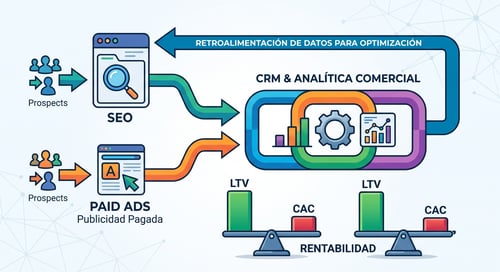
• Connect trending content to your strategic pillar: any seasonal piece should naturally lead toward your core offer.
• Apply a consistent SEO content strategy: it shouldn't be an isolated blog post, but one more piece within a sustained editorial plan.
• Prioritize search intent over trends: a piece that answers a real user question beats one that only mentions the trending topic.
• Follow up with people who arrive during these spikes: a seasonal visitor who receives no follow-up is a missed opportunity, not a failed conversion.
At TIS, as a consultancy specialized in web positioning and B2B growth marketing, we help companies build that response capability: content that works year-round, and knows how to capitalize on moments when digital attention multiplies. The question isn't whether the next high season will come. It's whether your company will be ready when it does.